
How Scapefin got started
Introduce your Etsy shop and tell us your story. How did you begin and decide on what to sell on Etsy, and how do you create your products?
Scapefin started as a side hussle between my partner and me, combining our growing love for aquariums. We noticed a gap in the market for practical, purpose-built tools tailored to fish breeders, aquascapers, and hobbyists looking for more than just generic plastic gear.
We began prototyping with 3D printers - starting with a simple contraption to help raise fish fry - and testing everything in our own tanks. That hands-on approach helped us create products that solve real problems in the hobby, and it wasn’t long before demand started to grow.
All of our products are designed in-house or in collaboration with independent designers who share our passion for aquatics. We manufacture everything ourselves using durable, aquarium-safe PETG filament, ensuring every item is made to a standard we’d trust in our own setups.
While our focus has always been aquatic, we’ve unexpectedly found a following among reptile keepers as well. Some of our hides and scaping tools have been repurposed for snakes, lizards and other terrestrial critters - something we never planned for, but fully embraced.
Favorite items
What are your favorite items? What makes these so special? Why do you think these items might be selling well?
Some of our favourite products are also our bestsellers:

Our current bestseller. This cave combines function and form - it offers a secure hiding place while the built-in viewing window lets keepers observe shrimp, plecos and shy fish without disturbing them. It looks great in any setup and really connects people to their critters.
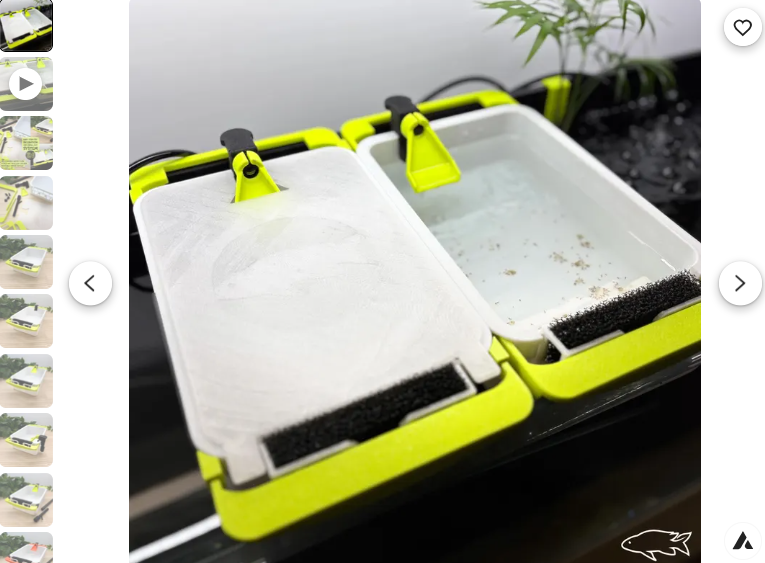
This is the product that started it all for us. We designed it to raise fry safely in-tank without the need for separate aquariums or complicated setups. It’s now a staple for many breeders, thanks to its simple setup, passive water flow, and consistent results.

Designed for egg scatterers like danios, rasboras and CPDs, this breeding trap helps collect and protect eggs before adults can eat them. It’s hands-off and works incredibly well.
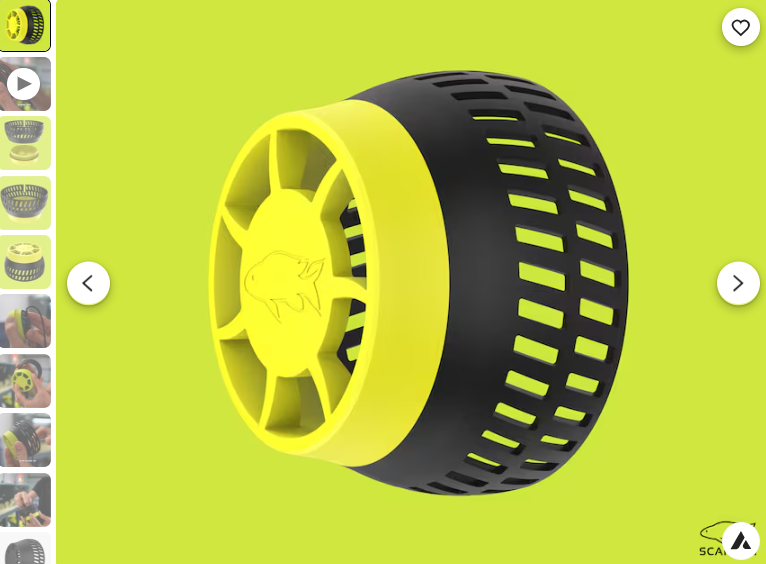
One of the first products we ever designed - a true passion project. After losing some of our own fish to an exposed wavemaker, we knew we had to create a solution. This guard is essential protection for small or curious fish and invertebrates, and it continues to resonate with keepers who’ve had similar experiences.
These products are popular because they solve specific problems in fishkeeping. They’re easy to use, well-tested, and designed with both the animals and the keeper in mind.
Getting sales on Etsy
How long did it take for you to earn your first sale and how do you currently attract customers to your Etsy shop?
We made our first sale on 27 December, and our second just a few days later on New Year’s Day. Those early orders came entirely from Etsy search. We didn’t spend anything on marketing in the beginning – our growth was driven by strong listings, clear photos, and solid SEO.
Not long after launching, we also created a YouTube channel to share our story, walk through our designs, and show how the products work in real tanks. It was a great way to connect with hobbyists and build trust early on. We haven’t had time to add much since then – running the Etsy store has kept us flat out—but it’s something we’re keen to return to.
Only recently have we started investing in marketing to boost visibility and scale things further. But even now, Etsy’s built-in search remains a key source of traffic and discovery.
Managing Scapefin
How do you manage your shop? Are you running solo or do you have any team members? What tools or services do you use to run your shop and how do you handle fulfillment?
Scapefin is a small, hands-on team made up of me, my partner Tyler, and our in-house designer, Rohit. Together, we handle everything from product design and printing to packing orders and customer support. We also collaborate with a few independent designers who help bring specialised ideas to life.
For a time, we fulfilled North American orders through friends in Florida while handling all other orders from Australia. While the faster delivery and cheaper domestic shipping were a plus, the complexity of running split production became increasingly difficult to manage.
The turning point came when our U.S. material supplier ran out of stock for nearly two months. Our core filament, PETG, is sourced from China, and disruptions like this, paired with growing uncertainty around tariffs and trade, made it clear we needed to simplify operations. So we brought everything back under one roof.
We now craft, pack, and ship every order from our home workshop in Brisbane, Australia—which is, quite literally, our double garage. One side is a wall of aquariums, and the other is lined with 3D printers. It’s a space that perfectly reflects what we do and why we do it.
Although we ship globally, most of our orders fall under the de minimis threshold, meaning they aren't impacted by import tariffs, which has made continuing to fulfill U.S. orders from Australia viable. Our shipping volume also qualifies us for the highest discount tier with our postal service, helping us absorb the cost of international deliveries without raising prices.
Our day-to-day tools include G Suite for communication, Trello for workflow management, and Alura for listing optimization. We especially love the customer follow-up tool in Alura—it’s helped us stay engaged with buyers and build long-term relationships.
Shopify acts as our central hub, supported by apps like CedCommerce for Etsy syncing and Judge.me for managing product reviews. For accounting and reconciliation, we use Xero along with Link My Books to keep everything streamlined.
Even within Etsy, we’ve found small features like tags incredibly helpful for managing conversations, tracking orders, and staying organized.
The future of Scapefin
What goals do you have for your shop in the future?
We’re focused on growing Scapefin into a trusted name in the aquarium space—not just on Etsy, but across the hobby. That means expanding our range to support more tank sizes, more species, and more water types. We’ve built a strong foundation in freshwater breeding tools, and now we’re moving into marine and reef setups, with new designs in development for coral fragging, saltwater filtration, and scaping solutions.
We’ve also found unexpected demand from reptile keepers using our caves and hides in terrariums, so that’s another area we’re exploring further.
Locally, we’re expanding into wholesale by partnering with independent aquarium shops around Australia. It’s been a great way to get our products into physical stores and connect with more keepers face-to-face. We're taking a slow and steady approach to make sure quality and service remain strong as we scale.
We’re also keen to create more content—educational videos, behind-the-scenes looks, and setup guides—to share the thinking behind our designs and connect more closely with the community. It’s something we’ve always wanted to do more of, and we’re carving out the time to make it happen.
Longer term, the goal is to move out of the garage and into a dedicated studio space – with more printers, more tanks, and the breathing room to keep creating and growing.
Advice for new sellers
What’s your advice for a new seller starting an Etsy shop?
Start with a real problem you can solve—ideally, one you understand from personal experience. Niche is good, but niche in a niche is even better. Some of our most successful products are hyper-specific solutions for very specific types of fishkeepers.
Take the time to get your listings right. Photos speak a thousand words—don’t underestimate them. The main image is what gets the click, and it’s not always the photo you expect. Don’t be afraid to split test and swap feature images to see what performs best. Clear titles, strong SEO, and thoughtful descriptions all help, but the photo is what draws people in.
Be prepared for early success. It sounds great, but it can actually be one of the most challenging times. Etsy may hold your funds until orders are fulfilled, so even with strong sales, cash flow can get tight early on. Plan for that if you can.
Also, don’t fear negative reviews. Mistakes happen. What matters most is how you handle them. Always reach out to the customer first through Etsy Messages before responding publicly, as replying locks the review in. More often than not, a thoughtful message and a fix can turn a negative into a loyal repeat buyer.
Finally, build systems you can scale. You don’t need everything to be perfect from day one, but staying organized early makes growth a lot more manageable.
And don’t be afraid to show your human side. People connect with stories, not just products, so let your personality come through.
Some sellers really get inspired by hearing numbers. Feel free to share these if you like.
Question: How much is your monthly revenue?
Answer: Average of around AUD $15,000, since March.
Question: What is your average profit margin?
Answer: Our average margin sits around 50–60%, depending on the product and shipping destination.
Question: What is your shop’s conversion rate?
Answer: 1.6%